


In line with the Nationwide Indigenous Languages Survey, by the early 2000s, solely 30-50 Gumbaynggirr audio system remained – none of whom had been youngsters. In response, Webb developed three native tourism experiences beneath the Bularri Muurlay Nyanggan Aboriginal Company (BMNAC), whose income had been to be reinvested into Gumbaynggirr language revitalisation programmes – together with NSW’s first Indigenous bilingual college, which opened in 2022. “We’re nonetheless endangered, however I really feel like we have lifted out of the critically endangered state of affairs,” he stated.
Now with greater than 100 college students enrolled between the ages of 5 and 15, the college has grow to be an essential a part of that revival. “We have now 20 college students who we contemplate extremely proficient,” Webb informed me. “They’ll inform six cultural tales utterly in Gumbaynggirr,” every of which is greater than 5 minutes lengthy, he famous. “We have one other 30 [students] who we contemplate as proficient.”
Extra like this:
• The gorgeous Canadian island you’ll be able to see however not contact
• The hike making Australia a greater place
• Japan’s forgotten Indigenous individuals
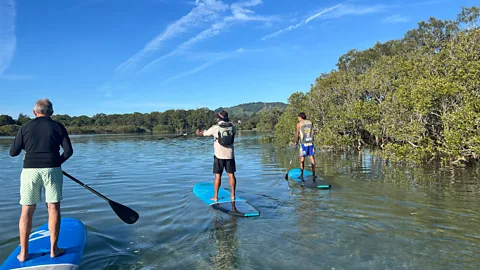
Alongside Wajaana Yaam’s paddleboarding excursions, BMNAC additionally presents month-to-month cultural immersion experiences at Niigi Niigi (Sealy Level) Lookout, the place travellers can find out about Gumbaynggirr ceremony, music and dance. Close by, the Nyanggan Gapi cafe serves baked items flavoured with wattleseed and lemon myrtle, native components lengthy utilized in Aboriginal bush tucker (meals ready utilizing native animals and crops).
“That is the place tourism matches in,” Webb stated. “It is about educating individuals from all walks of life about why language and tradition is so essential to our communities. Our greatest tour guides are the individuals who know the language and know the tradition as a result of they can provide a deeper evaluation and interpretation of our tales and crops.”
 Ren O’Flaherty