


Your help helps us to inform the story
From reproductive rights to local weather change to Large Tech, The Unbiased is on the bottom when the story is creating. Whether or not it is investigating the financials of Elon Musk’s pro-Trump PAC or producing our newest documentary, ‘The A Phrase’, which shines a light-weight on the American girls preventing for reproductive rights, we all know how necessary it’s to parse out the details from the messaging.
At such a crucial second in US historical past, we want reporters on the bottom. Your donation permits us to maintain sending journalists to talk to each side of the story.
The Unbiased is trusted by People throughout the complete political spectrum. And in contrast to many different high quality information retailers, we select to not lock People out of our reporting and evaluation with paywalls. We imagine high quality journalism must be out there to everybody, paid for by those that can afford it.
Your help makes all of the distinction.
Learn extra
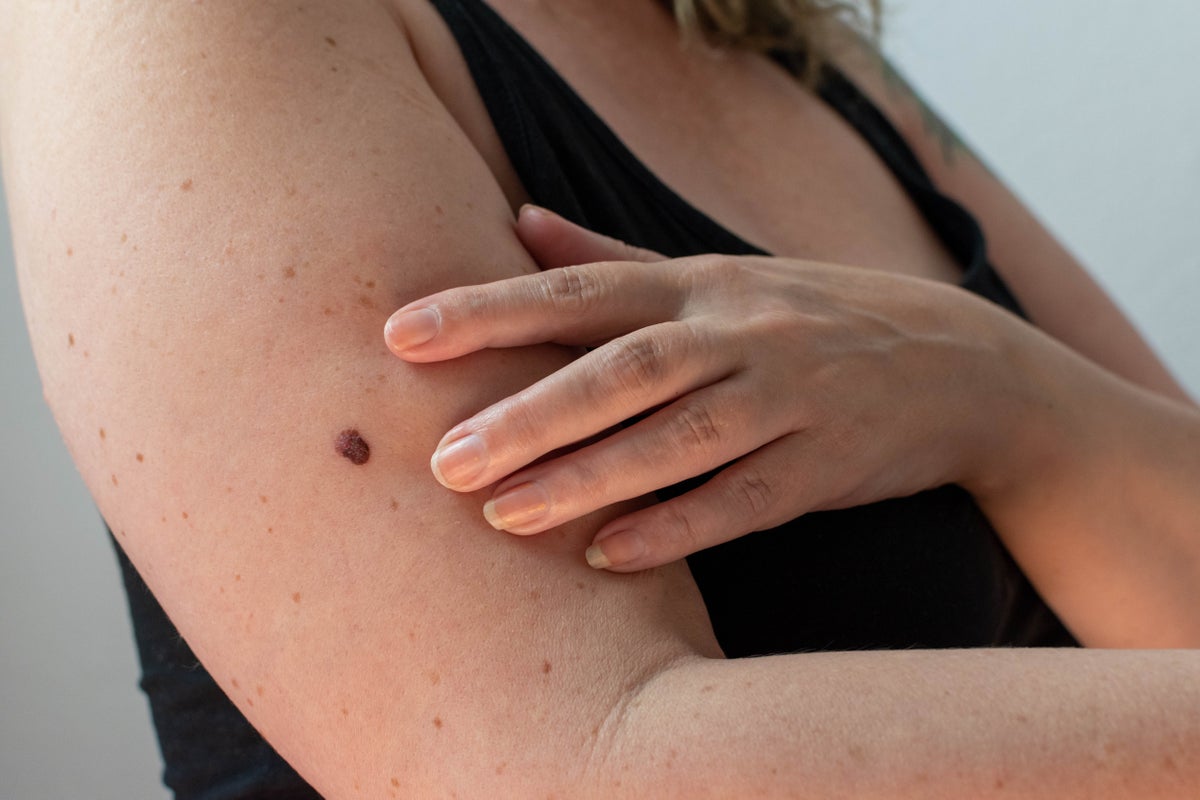
Think about you’re getting out of the bathe one morning and also you discover a mole in your thigh that you simply’ve by no means seen earlier than. It’s reddish brown, bumpy and surprisingly giant. Is it a benign mole, or is it melanoma?
A slew of recent synthetic intelligence instruments declare they may also help you work it out. Some are smartphone apps that anybody can obtain to scan their pores and skin at house, whereas others are software program applications designed for use straight by clinicians in a health care provider’s workplace.
As a pc engineer finding out how instruments like these carry out in real-world medical settings, I do know that discovering a technique to precisely use AI in dermatology can be immensely beneficial to sufferers all over the world. It may provide broad entry to medical experience, offering lifesaving screenings to distant areas or underresourced communities the place dermatologists are scarce.
However in the meanwhile, these instruments have a vital shortcoming that researchers should resolve: They’re more and more correct for individuals with gentle pores and skin – however they’ve an enormous blind spot with regards to analyzing darker pores and skin.
Pores and skin-deep accuracy
The central fable of AI is that it features objectively. In actuality, an AI mannequin is just a pattern-matching engine. It learns to affiliate sure visible options with sure ailments.
However it may simply be thrown off by the background shade of an individual’s pores and skin. In different phrases, the AI mannequin doesn’t study to have a look at the lesion itself. As an alternative, it picks up on the colour of the encompassing pores and skin as a clue. Which means the mannequin’s means to make correct predictions basically degrades to guesses primarily based on pores and skin shade.
My colleagues and I discovered that the flexibility of those instruments to precisely diagnose pores and skin situations dropped considerably after we merely darkened the encompassing pores and skin on sufferers’ photos. We skilled an AI mannequin on pictures of recognized pores and skin situations in light-skinned sufferers, then digitally manipulated the pictures to resemble darker pores and skin tones. The medical situation within the photograph had not modified, however the AI’s means to acknowledge it deteriorated sharply.
For instance, think about a situation equivalent to atopic dermatitis – a power, itchy and inflammatory pores and skin illness. It causes a pores and skin discoloration that seems pink on gentle pores and skin however grey or violet on darker pores and skin. Our analysis and that of different teams exhibits that AI fashions would reliably classify the pink marks however may not establish the darker colours as indicators of atopic dermatitis.
This AI classification blind spot signifies that sufferers with darker pores and skin would obtain measurably worse care. The disparity has crucial penalties as a result of pores and skin cancers equivalent to melanoma are visually more durable to identify on pigmented pores and skin. Sufferers of shade are already extra more likely to be recognized at a extra superior stage, which results in considerably decrease survival charges. A diagnostic device that works higher for individuals with lighter pores and skin solely widens this hole.
The pores and skin tone hole
This bias extends past instruments utilized by clinicians to extra extensively used AI chatbots, equivalent to ChatGPT or Claude. The stakes can develop into greater when individuals flip to those instruments for medical solutions with out a clinician to double-check the output, making accuracy throughout all pores and skin tones a matter of affected person security.
Mohamed Akrout is an Assistant Professor of Electrical Engineering and Laptop Science, College of Tennessee. This text was first revealed by The Dialog and is republished below a Artistic Commons licence. Learn the authentic article .
In a 2024 research, we introduced OpenAI’s mannequin, GPT-4, with a picture of a totally benign mole. After we digitally darkened the pores and skin across the mole whereas retaining the mole itself precisely the identical, GPT-4 categorized the spot as malignant melanoma. As a result of the pores and skin shade is the extra outstanding characteristic, the AI grew to become so targeted on the darkish pigment of the pores and skin that it ignored the usual medical guidelines used to establish most cancers, equivalent to checking whether or not the mole’s borders are irregular.
If an individual makes use of these instruments at house, a innocent darkish spot would possibly set off pointless panic, whereas a life-threatening most cancers on darkish pores and skin may very well be neglected.
Fixing how AI is skilled
Why does this bias exist? The reply lies within the photos used to coach AI fashions.
Researchers construct these AI fashions by feeding them a whole lot of 1000’s of photos pulled from public on-line libraries of medical images shared by universities and hospitals.
Traditionally, these medical databases – in addition to dermatology textbooks – have been dominated by photos of lighter pores and skin tones. Darker pores and skin photos are comparatively uncommon, partially as a result of medical norms have been developed primarily round white sufferers. If an AI mannequin is rarely taught what melanoma seems like on darkish pores and skin, it merely received’t know easy methods to discover it.
To realize the identical accuracy on darker pores and skin as on lighter pores and skin, these fashions want a extra numerous set of photos for coaching. Nonetheless, whereas there are thousands and thousands of images of light-skinned sufferers already out there in historic databases, gathering an enormous new database of actual images from sufferers of shade raises difficult moral and affected person privateness points.
Generative AI gives restricted assist
A method round this privateness hurdle could also be to make use of generative AI – the identical expertise powering chatbots, which may also be used to make deepfake movies – to artificially generate 1000’s of artificial medical photos.
Utilizing simply textual content prompts, researchers can create sensible, high-quality photos of situations equivalent to melanoma on darker pores and skin tones. My colleagues and I confirmed that an AI skilled solely on these artificial photos can study to accurately categorize knowledge utilizing these photos simply in addition to one skilled on actual ones.
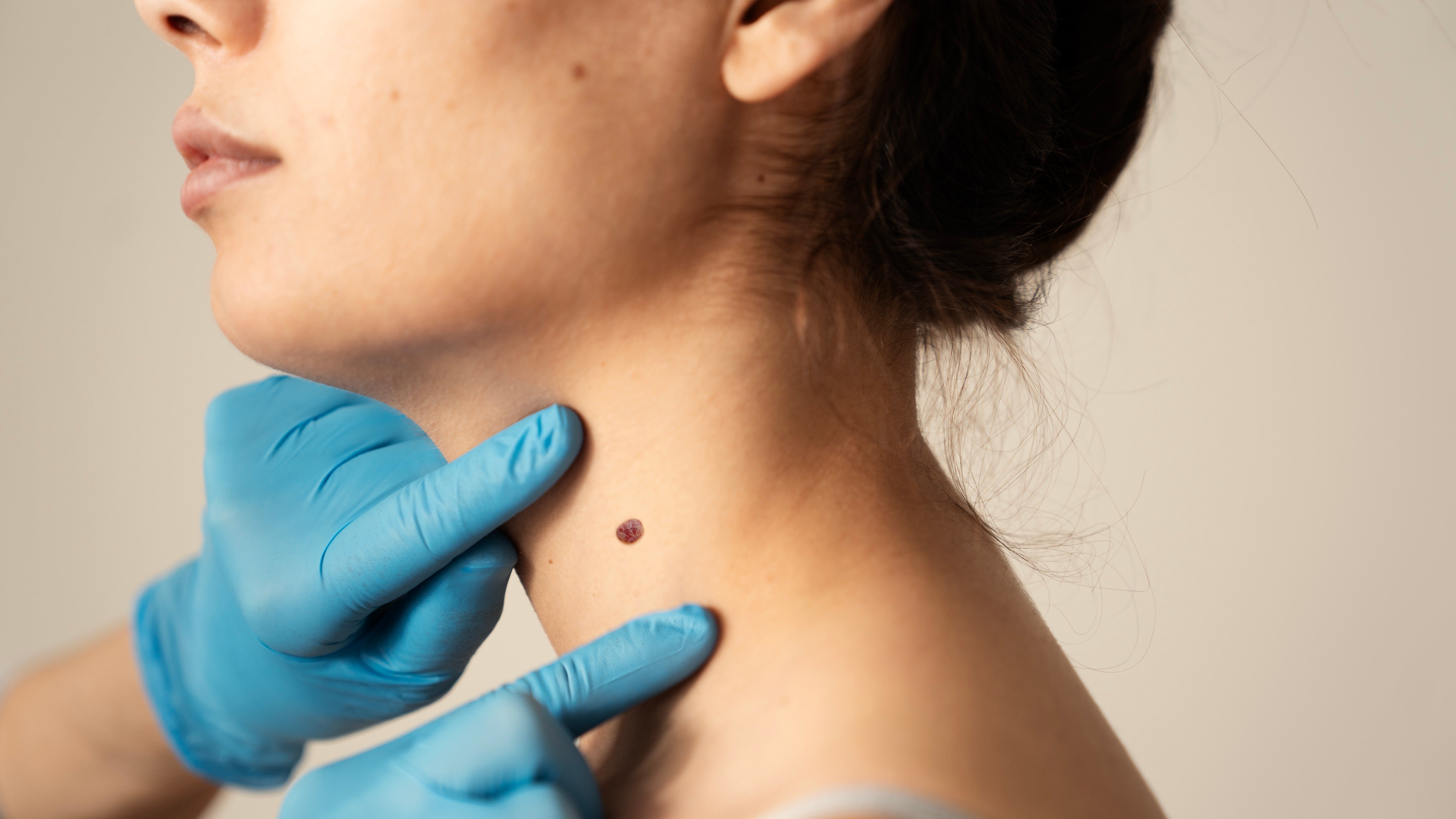
Nonetheless, this strategy carries a hidden danger: Generative AI fashions can create high-quality photos, however they could not map cleanly onto the traits of pores and skin situations that sufferers truly expertise. This could be like utilizing an inaccurate map to show somebody easy methods to navigate.
If researchers prepare a diagnostic AI device on these flawed artificial photos, the information would possibly look completely numerous on a spreadsheet, however the device will stay functionally blind to how these ailments truly seem on actual sufferers of shade.
For the time being, there is no such thing as a shortcut round this drawback. The one viable path ahead is to construct extra inclusive and consultant collections of photos, notably from individuals with darker pores and skin tones.
In the present day, the medical AI area is at a crossroads. Whereas a few of these AI skin-scanning instruments are already making their method into clinics and app shops to be used within the U.S. and all over the world, researchers and regulators are already pushing for stricter testing throughout all pores and skin tones earlier than these instruments are extensively deployed.
In the end, eliminating color-based bias in AI isn’t nearly equity, however quite absolutely the baseline required to make sure these instruments truly work for the individuals who want them most.