


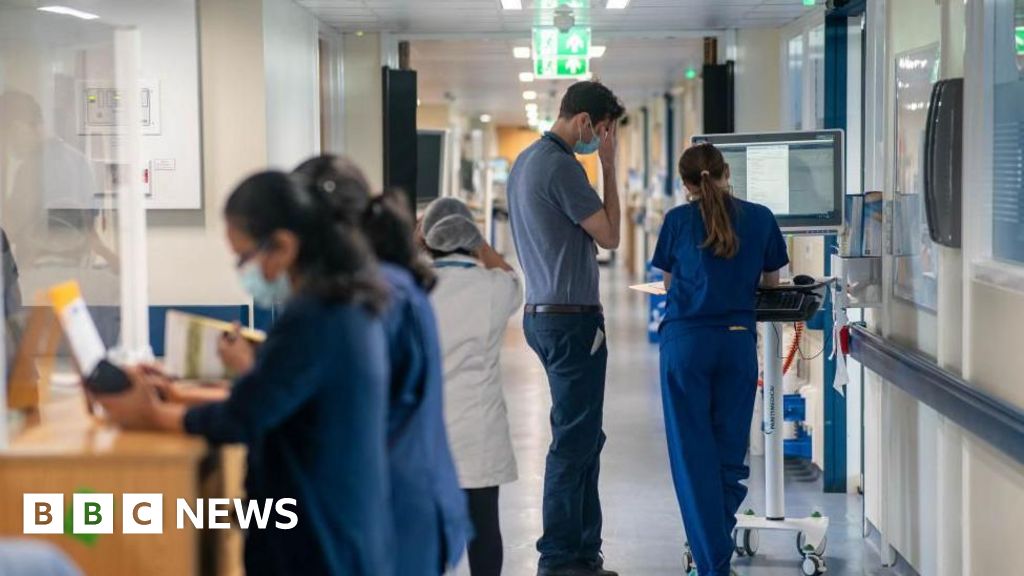
A rising variety of end-of-life sufferers in hospitals may have an effect on the extent of remedy carried out this winter, a bunch of regional NHS leaders have been informed.
A guide in palliative care highlighted the upcoming “disaster” throughout an internet inner assembly of well being leaders in Sussex, a recording of which has been heard by the BBC.
The guide at College Hospitals Sussex NHS Belief described dilemmas going through hospital managers when some sufferers are having to be given end-of-life care in A&E corridors.
The awful evaluation is prone to be echoed in different NHS areas as constructing winter pressures enhance the problem of looking for hospital beds for sick sufferers needing care.
College Hospitals Sussex Belief contains Worthing Hospital, Royal Sussex County Hospital, St Richard’s Hospital in Chichester and Princess Royal Hospital in Haywards Heath.
Medical doctors and officers from East Sussex Healthcare NHS Belief, which incorporates Conquest Hospital in Hastings and Eastbourne District Basic Hospital, additionally took half within the assembly together with group well being representatives.
The guide made a slide presentation entitled “Palliative and Finish of Life Care in Sussex” on the assembly, which befell on 4 November.
She informed the viewers that native hospices have been struggling and it was tough to seek out locations for sufferers who want end-of-life care, whereas it was generally not clear how a lot assist there is perhaps in the area people when persons are despatched house.
She stated: “I’m actually nervous that sufferers who’ve treatable circumstances should not going to have the ability to get into hospital and be handled as a result of there are such a lot of end-of-life sufferers in hospital beds.”
She went on to say “we’re not placing sufferers on the ready checklist for switch who’re simply simple dying”, focusing solely on these with complicated wants.
On giving enhanced palliative care in A&E, the guide stated it was a “actually tough alternative – do you admit them for hall care or do you flip them spherical, put them at the back of the ambulance the place they could die on the best way house”.
She argued there have been “a lot of sufferers in hospital who do not have to be there, a lot of sufferers with complicated wants who haven’t got their wants met”.
She concluded: “We have all recognized this disaster is coming – it’s getting worse and worse”.
A spokesperson for the NHS in Sussex stated it was dedicated to making sure that sufferers have entry to the “very best, high-quality palliative and end-of-life care”.
They stated: “This contains offering a variety of locations for compassionate, person-centred care – and importantly, the place doable, in settings out of hospital, similar to group settings, and our hospices.
“Emergency care companies throughout Sussex stay underneath important strain however employees proceed to work extremely exhausting to verify sufferers can obtain the care they want at our hospitals, and throughout all our well being and care companies.
“There may be sturdy partnership work in place over the winter interval to assist particular person care plans, and to make sure that persons are in the fitting NHS service for his or her wants.”
However the Royal Faculty of Emergency Medication stated delayed discharges have been an enormous problem throughout the NHS, and a scarcity of social or group care may imply some sufferers needing end-of-life care and assist couldn’t go away hospitals.
Its president, Dr Ian Higginson, stated the school was “nervous in regards to the variety of sufferers who want end-of-life care who find yourself in emergency departments, after which hospitals, as a result of the devoted companies they want should not obtainable”.
He stated: “Sufferers who would like to be at house might find yourself in our corridors, which aren’t the fitting locations for anybody, not to mention those that are on the finish of their lives.”
One NHS clinician, who wished to stay nameless, contacted the BBC, saying issues had constructed up for a while: “Finish-of-life care delivered in emergency departments, corridors, ambulances, or by way of unsupported discharges house has turn out to be more and more routine throughout a number of areas. What is especially placing is the recurring sample: hospital beds occupied by dying sufferers who ought to by no means be there and restricted or delayed entry to hospice or group care.”
The NHS Confederation, which represents NHS leaders, stated hospitals could be the “default choice” when group and social care provision is underneath strain or unavailable.
“The answer will not be about asking hospitals alone to soak up extra strain – it’s about investing throughout the entire system,” stated Rory Deighton, director of the Confederation’s acute community.
In the meantime, group companies are additionally stretched and hospices are warning of a funding disaster.
Toby Porter, chief govt of Hospice UK stated: “Whereas hospital could be the fitting place for some, a busy ward simply is not the fitting place for most individuals who die.
“Hospices throughout the nation wish to present extra care in the neighborhood however this 12 months we have seen it in the reduction of due to funding pressures. And that’s having a knock-on impact in hospitals.”