


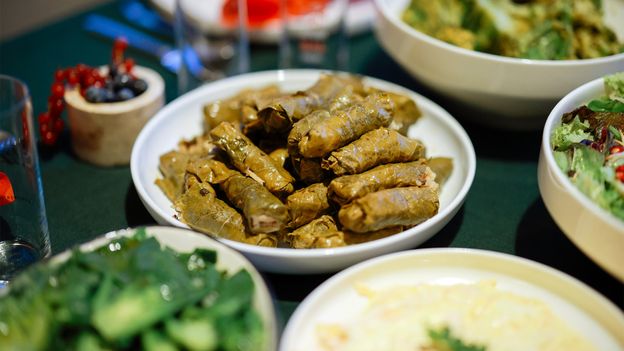
This labour-intensive dish has crossed empires, borders and perception programs, turning into a shared language of generosity all over the world.
When Fatima Oliyan hosts company for a standard Saudi vacation meal at her dwelling in Riyadh, her menu virtually at all times options waraq enab, or stuffed grape leaves, also called dolma. Neatly rolled and topped with a touch of lemon juice, the leaves are full of a spiced combination of rice, meat and greens, then fastidiously organized on a large platter.
“I really like making dolma at dwelling,” says Oliyan. “Now we have been making these for ages in our household. I can’t even think about a festive platter with out it.” For her, dolma isn’t just meals; it’s love, togetherness and hospitality wrapped into one chew.
I’ve lived within the Center East for greater than 5 years, and the tangy grape-leaf dolma, typically reserved for celebrations, has turn into certainly one of my favourites, too. I like it particularly in the course of the holy month of Ramadan, when town’s meals scene comes alive after sundown. Though I do not quick myself, I get pleasure from hopping from one restaurant to a different and shuttling between mates’ houses, tasting barely totally different variations of dolma each night time at iftar – generally spicier, generally barely extra piquant and generally merely vegetarian.
Nonetheless, these small variations at dinner tables in Riyadh level to a a lot bigger story: the story of a dish that travelled throughout continents and cultures to turn into an emblem of generosity and welcome all over the world.