


The UK’s power system is present process an enormous, unprecedented transition.
If you happen to look again during the last 25 years, we have been de-industrialising and utilizing much less power, at the same time as grid capability elevated. In the present day, nonetheless, we face a totally new paradigm: we should accommodate extremely scattered, intermittent renewable era whereas concurrently managing a surge in general electrical energy demand.
For C-suite decision-makers, this macroeconomic shift is now not simply an summary sustainability problem; it’s about to turn out to be a really actual, very painful line-item expense on the steadiness sheet.
To fund the mandatory estimated £70bn grid infrastructure improve over the subsequent 5 years, the best way companies are being charged for transmission providers is essentially altering. For years, finance leaders may depend on conventional power procurement and primary power effectivity measures, resembling decreasing consumption throughout winter ‘triad’ peak intervals, to keep away from excessive transmission fees.
That mechanism is being phased out and is now nearly gone.
Following Ofgem’s Focused Charging Evaluation (TCR), most Transmission Community Use of System (TNUoS) fees are actually decoupled from precise consumption. They’ve been changed by an unavoidable, fastened day by day cost: the Transmission Demand Residual (TDR).
This has, in flip, created a profound regulatory mismatch. Present community guidelines punish companies for temporary energy spikes, forcing them to pay huge 365-day standing fees for capability wanted solely in brief bursts.
Worse nonetheless, these fees are locked into inflexible five-year value management intervals. In April 2026, fastened TDR fees will bounce by over 65 per cent. For a lot of medium-sized power customers, this implies an unavoidable invoice enhance of round £75,000 per yr, locked in till March 2031.
Why conventional power methods now not work
Traditionally, rising power prices could possibly be managed by means of good procurement or site-wide effectivity drives. In the present day, nonetheless, these new fastened capability fees require a essentially totally different method. As a result of TDR bands are primarily based in your peak connection reasonably than your general quantity, conventional methods solely resolve a part of the equation. Even an ordinary photo voltaic set up, whereas glorious for decreasing general consumption, can’t at all times assure energy throughout a sudden demand spike on a darkish winter afternoon.
As well as, the plain regulatory repair; merely decreasing your contracted import capability to drop into a less expensive band – is now not easy. As a result of TDR bands are locked into five-year intervals, incremental capability reductions mid-cycle are now not recognised. Below present guidelines, the one method to set off a mid-period band discount is that if a web site surrenders greater than 50 per cent of its whole contracted capability.
How storage and era can cut back grid publicity
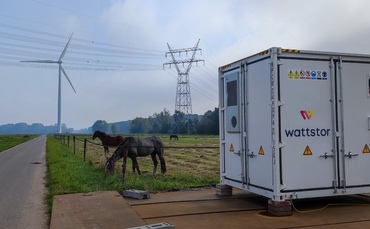
By pairing on-site renewable era with a Battery Power Storage System (BESS), a enterprise can successfully decouple its operational energy wants from its grid dependence. Consider the battery as a dynamic, invisible buffer. It displays your web site’s demand in real-time, immediately stepping in to offer energy throughout sudden surges.
This smooths out your grid profile seamlessly, guaranteeing your core operations by no means should decelerate. This localised buffering creates extra headroom inside current capability, permitting operations to develop with out triggering greater fastened fees.
De-risking the transition with a totally funded resolution

Even when the operational and regulatory advantages are clear, the capital expenditure required for business photo voltaic and battery storage stays a big hurdle for a lot of organisations.
To take away this monetary barrier, Wattstor developed the Worth Defend mannequin. Moderately than anticipating companies to shoulder the upfront value and technical complexity of recent infrastructure, we totally fund, construct, and function the era and storage property immediately in your web site.
Wattstor seamlessly blends your grid energy with the onsite era, consolidating your provide right into a single, totally dynamic tariff. This uniquely structured settlement tracks the UK hourly wholesale value (permitting you to capitalise on market dips with a assured low cost) whereas strictly shielding your steadiness sheet with a hard and fast, non-indexed value cap for as much as 25 years.
In the end, Wattstor absorbs the technical, operational, and monetary dangers of the transition. Your corporation secures the bodily infrastructure wanted to completely decrease its capability fees, alongside rapid and long-term power financial savings, with zero capital funding required. A real win win.
**
The grid is altering and the prices of inaction are rising quickly.
The companies that thrive on this new period would be the ones that take management of their very own power – localised not centralised.
**
Kevin Ball is chief business officer at Wattstor.
This text is sponsored by Wattstor.