


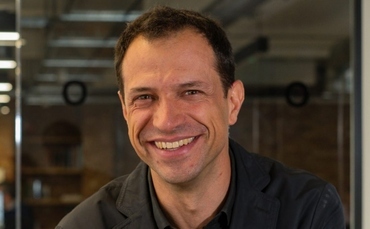
BusinessGreen: What was your first function within the low-carbon financial system and what attracted you to the sector?
Xavier Aguiló: My first function within the low-carbon financial system started in 2012, after I began designing sustainable buildings. I used to be drawn to the sector by the possibility to deal with the constructed atmosphere’s vital environmental impression by considerate, revolutionary design. I used to be additionally drawn to the problem of making buildings that not solely served their practical objective but in addition minimised their carbon footprint – a accountability I felt was important for our career.
Initially, my focus was on decreasing operational carbon by energy-efficient programs, passive design methods and renewable power integration. Because the trade advanced and our understanding of carbon impacts deepened, I broadened my strategy to deal with embodied carbon, the emissions related to supplies, building, and all the constructing lifecycle.
SOCOTEC is sponsoring the Innovation of the 12 months class at this yr’s UK Inexperienced Enterprise Awards – what do you suppose are the largest drivers of innovation within the low-carbon financial system?
The drivers of innovation within the low-carbon financial system are multifaceted. Coverage and regulation actually are the leaders right here, with authorities intervention remaining elementary. Local weather insurance policies, together with emissions buying and selling programs, carbon pricing and R&D subsidies, have confirmed notably efficient at spurring innovation. Worldwide cooperation and regulatory frameworks create the market circumstances wanted for low-carbon options to compete and scale.
The shift in direction of round financial system rules and materials passports represents a transformative strategy. By monitoring supplies all through their lifecycle and designing for re-use, we basically problem the linear ‘take-make-dispose’ mannequin. This transparency permits higher decision-making and accountability.
When the true carbon and useful resource prices of supplies are mirrored in pricing, this naturally drives innovation in direction of lower-impact alternate options. This market sign can rework trade practices extra successfully than regulation alone.
Sustainable finance mechanisms are easing credit score constraints and altering danger pricing, making inexperienced capital extra accessible and engaging. This monetary assist accelerates the event and deployment of low-carbon applied sciences.
However, maybe most significantly, innovation within the low-carbon financial system requires a mindset shift, primarily in doing solely what is completely essential, prioritising high quality over amount, and designing for longevity. This ‘much less, however higher’ philosophy, mixed with materials transparency and correct pricing, can catalyse the systemic transformation wanted to attain significant decarbonisation.
What do you suppose are the keys to a profitable innovation mission?
Usually, probably the most impactful improvements come from doing issues in a different way – making use of present methodologies in novel methods or adapting confirmed approaches to new contexts. This pragmatic view makes innovation extra accessible and sustainable throughout initiatives.
Profitable innovation thrives in environments that encourage experimentation and steady enchancment. By treating every mission as a possibility to innovate, we foster a tradition the place groups are empowered to problem standard approaches. This requires cross-functional collaboration, bringing collectively technical, business, and operational views to make sure improvements are each technically sound and virtually viable.
Align useful resource allocation with clear innovation objectives, prioritise initiatives that ship actual worth, and guarantee groups have the assist they should execute revolutionary options successfully.
Which particular industries do you are feeling are blazing a path for others to observe when it comes to sustainable innovation?
Development and actual property stand on the forefront, pushed by the pressing want to deal with embodied and operational carbon. Tasks akin to ICTA-ICT in Barcelona and Castellana 69 in Madrid show how built-in design, materials passports, and circular-economy rules can dramatically scale back environmental impression. The sector is more and more adopting whole-life carbon assessments and prioritising regenerative design over merely compliant buildings.
The retrofitting of buildings is changing into more and more vital, too. In main cities, the alternatives to knock down and rebuild buildings are much less so, as a result of carbon impression, so as an alternative, we glance to reuse and retrofit a constructing to alter its use. Our groups throughout SOCOTEC work collectively with a view to retrofit present buildings as sustainably as attainable, all whereas being backed by the required engineering and compliance necessities.
Transportation networks, water administration programs, and sensible metropolis developments are embedding sustainability from conception by decommissioning, recognising infrastructure’s long-term environmental legacy. Power and industrial services are remodeling by decarbonisation methods, renewable integration, and operational effectivity enhancements.
Authorities coverage is accelerating this shift, however trade leaders are shifting past compliance to embrace circularity, transparency by materials passports, and the precept of ‘doing solely what is required’.
The place do you see the subsequent wave of inexperienced concepts and leaders coming from?
First, actual property and circularity are revolutionising building by the ‘no waste’ philosophy. This strategy strikes past conventional sustainability metrics to embrace round design rules the place supplies retain worth throughout a number of lifecycles, buildings change into materials banks, and waste is designed out of the system fully. Materials passports and round provide chains are enabling this shift, basically altering how we conceive, assemble, and deconstruct buildings.
Second, the information centre sector is changing into an surprising champion of innovation. As digital infrastructure expands exponentially, these services are pioneering options in power effectivity, waste-heat restoration, and renewable-energy integration. Ahead-thinking operators are remodeling knowledge centres from energy-intensive liabilities into belongings that contribute to native power programs, utilizing extra warmth for district heating and exploring revolutionary cooling applied sciences that minimise water consumption.
We’re seeing infrastructure initiatives evolving towards built-in system pondering. The normal siloed strategy to water therapy, sewage administration, waste processing and power technology is giving strategy to interconnected networks the place outputs from one system change into inputs for an additional. This round infrastructure mannequin recognises that water, waste, and power are interconnected assets requiring coordinated administration.
These sectors share a typical thread: they reject the linear take-make-dispose mannequin that has pushed unsustainable useful resource consumption. The leaders rising from these fields perceive that we can’t proceed overspending our planetary assets.
What developments do you suppose are at present below the radar?
World authorities initiatives are more and more mandating round financial system rules, shifting past conventional recycling in direction of complete reuse frameworks. America’ web zero authorities initiative, as an example, has launched ‘purchase clear’ programmes that prioritise low-carbon supplies and sustainable procurement, creating substantial market indicators for round merchandise. Equally, the EU’s forthcoming Round Financial system Act goals to double Europe’s circularity fee from 12 to 24 per cent by 2030, establishing a sturdy single marketplace for secondary uncooked supplies.
What stays underappreciated is the revolutionary potential of fabric passports and Prolonged Producer Duty (EPR) schemes. These mechanisms are quietly reshaping how we worth assets, shifting from conventional price fashions to impact-based pricing – a change that can basically alter trade economics.
Essentially the most under-the-radar improvement is maybe the mainstreaming of sustainability inside authorities workforces and procurement, creating unprecedented demand for round options. These coverage frameworks are laying the groundwork for zero-waste rules to change into the norm reasonably than the exception, positioning forward-thinking organisations to steer this inevitable transition.

What’s the largest false impression in regards to the low-carbon financial system?
The largest false impression in regards to the low-carbon financial system is that incremental enhancements and effectivity positive aspects alone will ship the transformation we’d like. Many imagine that optimising present programs – making buildings barely extra energy-efficient or utilizing marginally higher supplies – will clear up the local weather disaster, which is basically flawed.
One other crucial false impression is that local weather motion can succeed by remoted, localised efforts. This problem is inherently world and calls for coordinated worldwide responses. Carbon emissions know no borders, and fragmented regional initiatives, nonetheless well-intentioned, can’t obtain the size of impression required.
Maybe most importantly, there is a naive perception that industries will voluntarily rework with out clear financial incentives. Markets reply to monetary indicators, and with out authorities intervention to reshape these indicators, significant change stays elusive. That is the place coverage management turns into important – governments should take brave first steps, implementing daring measures akin to complete waste coverage reform and necessary water reuse programmes at nationwide, regional, and native ranges.
What recommendation would you give to somebody trying to work within the inexperienced financial system?
The excellence between ‘inexperienced’ and ‘brown’ economies is quickly dissolving. At the moment, the elemental query is not whether or not to work within the inexperienced financial system however reasonably recognising that any viable financial exercise should respect environmental boundaries.
For these getting into the workforce or contemplating a profession transition, my recommendation is easy: each trade, each function, and each mission should now embed environmental pondering. This is not about selecting between conventional careers and inexperienced alternate options – it is about understanding that environmental stewardship is changing into the baseline expectation throughout all sectors.
Deal with growing expertise that bridge technical experience with environmental consciousness. Whether or not you are in building, finance, engineering, or knowledge administration, understanding how your work impacts carbon emissions, useful resource consumption, and waste technology is important.
At SOCOTEC, we have noticed that probably the most profitable professionals are those that view environmental concerns not as constraints, however as drivers of innovation and alternative. They perceive that circularity, useful resource effectivity, and low-carbon options aren’t area of interest specialisations – they’re elementary elements of contemporary skilled competence.
The longer term would not supply a selection between inexperienced and brown pathways. There is just one path ahead, and it have to be environmentally accountable.
What can the inexperienced financial system do to raised promote its successes?
The inexperienced financial system should basically reframe its message: sustainability just isn’t an alternate path however the one viable future. We’re at present consuming 2.5 instances what the planet can regenerate yearly – a debt that might bankrupt any firm working below such phrases.
To successfully promote its successes, the inexperienced financial system ought to shift from cost-centric arguments to impact-based valuations. Each motion have to be measured not simply in monetary phrases however in environmental and social penalties. This requires clear reporting of success tales that show each ecological restoration and financial viability.
Nonetheless, promotion alone is inadequate. Governments should lead this transformation by daring coverage interventions, akin to re-defining waste administration, mandating water reuse, and incentivising round design methodologies. The non-public sector will solely pivot when regulatory frameworks and financial incentives align.
The narrative should evolve past ‘inexperienced versus conventional’ to determine that non-sustainable practices are merely out of date. That is about recognising that with out fast, coordinated motion, the medium and long-term merely will not exist as we all know them. Success tales ought to spotlight the urgency and present the tangible advantages of early adopters who’ve already dedicated to this inevitable transition. World alignment is important; localised efforts alone can’t clear up planetary-scale challenges.
Xavier Aguiló is director of sustainability and worldwide managing director at SOCOTEC.
SOCOTEC is the sponsor of the Innovation of the 12 months award on the UK Inexperienced Enterprise Awards 2026, which takes place on the night of 11 June at The Brewery in London. You’ll be able to reserve your home on the awards right here.