


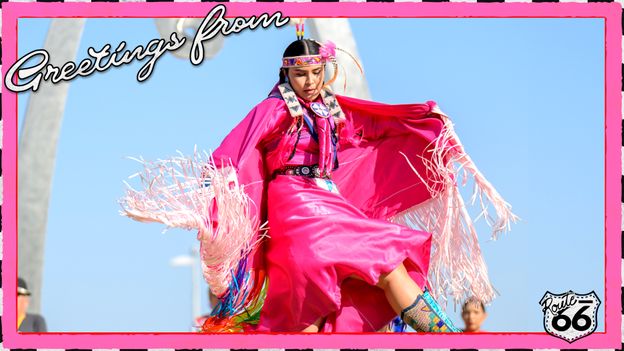
Stretching from Chicago to Santa Monica, the street passes by Native lands for a lot of its size – but Indigenous voices have lengthy been ignored. Now, First Nation communities are reclaiming their place alongside the Mom Highway, reshaping how travellers perceive and expertise the legendary freeway.
In a low-rise strip mall in suburban Tulsa, the scent of scorching bison drifts from the kitchen every time the door swings open. Inside Nātv – a quietly radical restaurant that opened in 2022 – sprigs of native grass from the Nice Plains, juniper berries and sunchokes line the slate-grey partitions. Throughout the desk from me, chef Jacque Siegfried, who’s of Shawnee descent, displays on the culinary hole she’s attempting to bridge. “It is nonetheless actually exhausting to seek out Native American eating places round right here,” she says, her navy-and-purple hair swept right into a excessive topknot.
We’re simply a few miles from Route 66, probably the most iconic of American roads, which turns 100 this yr. However as an alternative of trying to find classic diners and neon indicators, I’ve come to observe the route west from Oklahoma to New Mexico and see it by a special lens – one formed by the Indigenous communities which have lengthy existed alongside it.
Greater than half of Route 66 passes by or runs alongside self-governed Native American lands, typically known as Indian Nation. But Indigenous-owned companies stay strikingly uncommon alongside the route.
That hole is what led Siegfried to open Nātv. Drawing on her classical French culinary coaching and her Shawnee heritage, she crafts refined dishes that “convey Indigenous meals and native elements to the forefront”, she says, because the low hum of the visitors carries in from the close by freeway.