


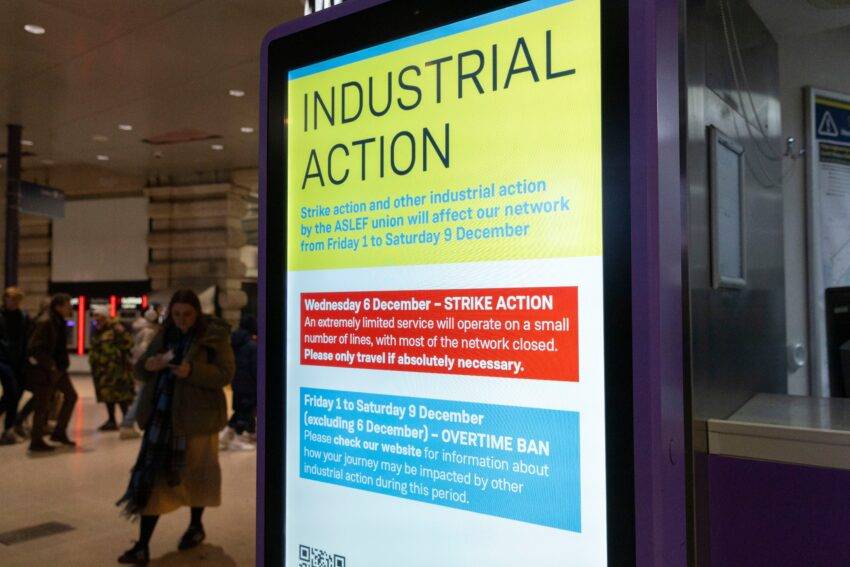
London’s small and medium-sized companies are bracing for a punishing week of disruption as London Underground drivers put together to stage two 24-hour walkouts, in a dispute over working patterns that threatens to empty thousands and thousands of kilos from the capital’s already fragile hospitality and night-time financial system.
Members of the Rail, Maritime and Transport (RMT) union will down instruments from noon on Tuesday 21 April and once more from noon on Thursday 23 April, with Transport for London (TfL) warning operators and passengers to anticipate “important disruption” throughout the whole community. A separate walkout by 150 Unite members working as bus station and community site visitors controllers, working from 23 to 25 April, is about to compound the distress.
For enterprise homeowners throughout the capital, the timing may scarcely be worse. Operators in hospitality, retail and leisure are already contending with a contemporary wave of power value rises, persistent wage pressures and jittery client confidence. The lack of dependable late-night transport, trade leaders warn, dangers tipping susceptible SMEs over the sting.
TfL has revealed a day-by-day forecast of probably disruption. Regular providers are anticipated to run on Tuesday 21 April till mid-morning, with availability petering out forward of the noon walkout. Any trains nonetheless working will wind down early, and TfL is advising those that should journey to finish their journeys by 8pm.
On Wednesday 22 April, providers will begin later than traditional, with no trains anticipated earlier than 7.30am. Vital disruption is forecast throughout all strains till noon, with a gradual restoration all through the afternoon and night.
The sample repeats on Thursday 23 April, with regular providers till mid-morning and a 12pm walkout triggering extreme disruption into the night. Friday 24 April will once more see no service earlier than 7.30am and persevering with disruption throughout the community.
Though a lowered timetable will function on some routes, TfL has confirmed there might be no service in any respect on the Piccadilly and Circle strains, no trains on the Metropolitan line between Baker Avenue and Aldgate, and no service on the Central line between White Metropolis and Liverpool Avenue. Trains that do run are more likely to be sporadic, overcrowded and unable to select up each ready passenger.
The Elizabeth line, DLR, London Overground and tram providers will function as regular.
Including to the disruption, seven bus routes operated by Stagecoach from Bow Bus Storage in East London might be affected by a 24-hour walkout from 5am on Friday 25 April. Routes 8, 25, 205, 425, N8, N25 and N205 are all in scope, though TfL expects the 25 and 425 to take care of a near-normal service for many of the day. The N8 will run a lowered route between Hainault and Liverpool Avenue at its traditional frequency, whereas the remaining routes are more likely to be severely delayed or cancelled.
The dispute centres on TfL’s proposal to introduce a four-day working week for prepare operators. The union has branded the plan “pretend”, arguing it could merely condense current hours into fewer days with out delivering real enhancements.
The RMT initially suspended strike motion final month after TfL administration agreed to barter, however accused the operator of reneging on the weekend.
RMT basic secretary Eddie Dempsey stated the union had “approached negotiations with TfL in good religion all through this complete course of”, including: “regardless of our greatest efforts, TfL appear unwilling to make any concessions in a bid to avert strike motion. That is extraordinarily disappointing and has baffled our negotiators. The strategy of TfL shouldn’t be one which ends up in industrial peace and can infuriate our members who wish to see a negotiated settlement to this avoidable dispute.”
Claire Mann, TfL’s chief working officer, countered that the proposals had been honest and versatile. “We’ve set out proposals to the RMT for a four-day working week. This permits us to supply prepare operators a further time off, while on the identical time bringing London Underground according to the working patterns of different prepare working firms, enhancing reliability and suppleness at no extra value. The modifications can be voluntary, there can be no discount in contractual hours and those that want to proceed a five-day working week sample would have the option to take action.”
For Michael Kill, chief government of the Evening Time Industries Affiliation (NTIA), the newest walkout is one other hammer blow to a sector working on empty.
“Because the sector faces a contemporary surge in power and working prices, this new wave of strike motion creates but extra uncertainty that companies merely can not soak up,” he stated. “Margins are being squeezed from each path, and confidence is more and more fragile.”
Mr Kill questioned the broader goal of the economic motion. “The continuing disruption to move providers begs the query, who does this truly profit? As a result of proper now, it’s companies, employees and the broader public who’re paying the worth for the reckless actions of the few.”
He warned that the knock-on results go nicely past misplaced footfall. “With out dependable late-night transport, employees battle to get to work, clients keep away, and companies lose important commerce. Many venues are already beneath intense monetary stress, continued disruption solely compounds that threat.”
Whereas acknowledging employees’ proper to withdraw their labour, Mr Kill referred to as for an pressing return to the negotiating desk. “We respect the best to strike, however this example can not proceed. All events should get around the desk and discover a decision, as a result of sustained uncertainty at a time like this may have critical, lasting penalties for London’s night-time financial system.”
TfL is urging travellers to make use of its journey planner to map their routes prematurely and to verify the standing of strains in actual time through its reside standing web page. For SMEs, the message from trade is easier: brace for a troublesome week, and begin demanding that each side discover a settlement earlier than the harm to the capital’s financial system turns into everlasting.